
Dive into Acrylic Pouring: Techniques, Materials & Creative Inspiration
Acrylic pouring, also known as fluid art, is a captivating painting technique that allows artists to create mesmerizing abstract designs through the flow of acrylic paints. Whether you’re a seasoned artist or a curious beginner, acrylic pouring offers endless possibilities for creativity and self-expression.
Understanding Acrylic Pouring
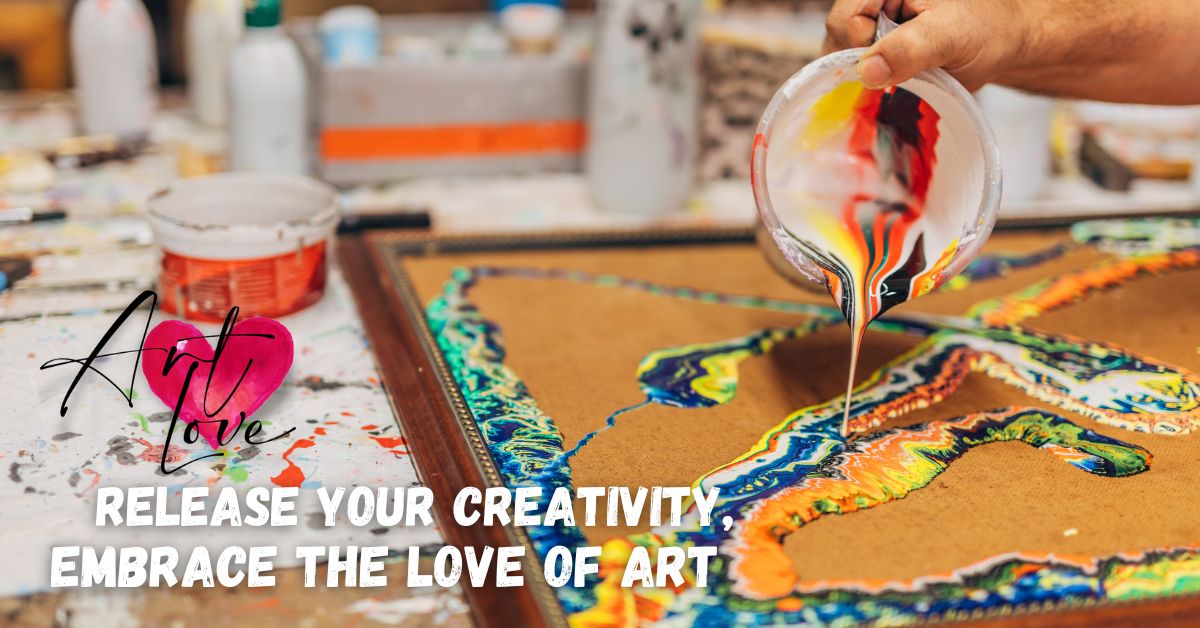
At its core, acrylic pouring involves mixing acrylic paints with a pouring medium to achieve a fluid consistency. This mixture is then poured onto a surface, allowing the colors to interact and form unique patterns. The beauty of this technique lies in its unpredictability—each pour yields a one-of-a-kind masterpiece.
Essential Materials for Acrylic Pouring
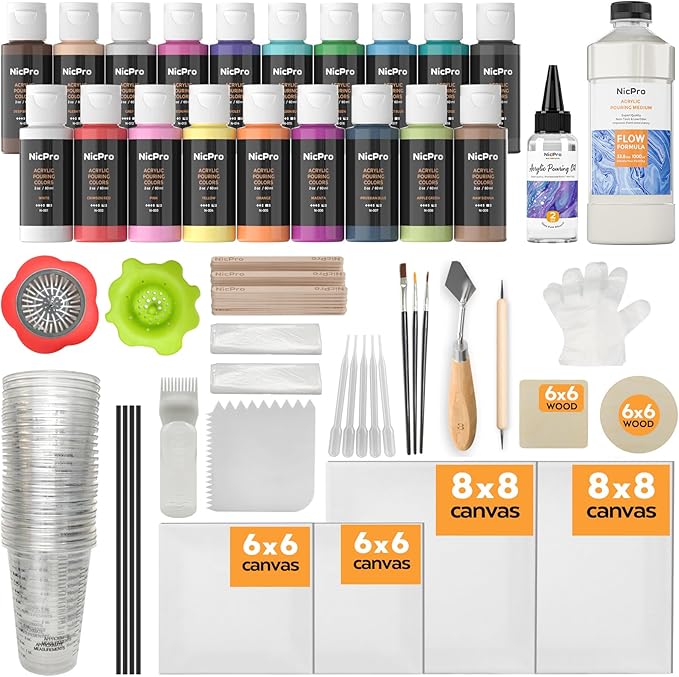
To embark on your acrylic pouring journey, you’ll need the following supplies:
- Acrylic Paints: Choose high-quality acrylic paints for vibrant colors. Fluid acrylics are ideal, but you can also use heavy-body paints thinned with a pouring medium.
- Pouring Medium: This additive enhances the flow of the paint without compromising its color intensity. Popular options include commercial pouring mediums, Floetrol, or PVA glue.
- Canvas or Substrate: Stretched canvases, wooden panels, or even unconventional surfaces like vinyl records can serve as your painting base.
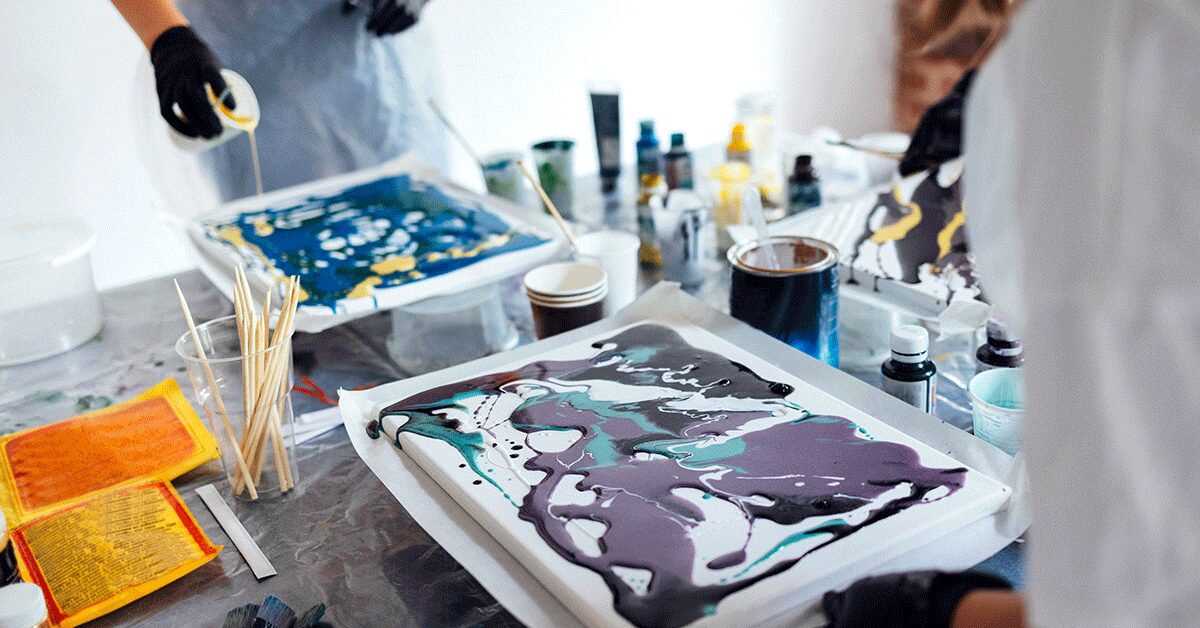
- Mixing Tools: Use plastic cups and stir sticks to combine your paint and pouring medium.
- Optional Additives: Silicone oil can be added to create “cells”—those intriguing circular patterns that emerge during the pour.
- Protective Gear: Gloves, aprons, and a well-ventilated workspace are recommended to keep things clean and safe.
For a comprehensive guide on supplies, check out this Pour Painting Supplies Guide by Olga Soby.
Popular Acrylic Pouring Techniques
- Dirty Pour: Combine multiple paint colors in a single cup and pour them onto the canvas. This method creates intricate, marbled effects.
- Flip Cup: Fill a cup with layered paint colors, place it upside down on the canvas, and lift it to let the paint flow out.
- Puddle Pour: Pour individual colors directly onto the canvas in puddles, allowing them to spread and interact.
- Swipe Technique: After pouring the paint, use a tool like a palette knife or paper towel to swipe across the surface, revealing underlying colors and creating cells.
- String Pull: Dip a string into paint, lay it on the canvas, and pull it to create floral or feather-like patterns.
For visual demonstrations of these techniques, explore this TOP 10 Awesome Acrylic Pouring Techniques.
Tips for Successful Acrylic Pouring
- Consistency is Key: Aim for a paint consistency similar to warm honey. This ensures smooth flow and optimal color blending.
- Layering Colors: When layering colors in a cup, consider the density of each color. Heavier colors will sink, affecting the final pattern.
- Torching: Using a torch or heat gun can help eliminate air bubbles and enhance cell formation.
- Drying Time: Allow your painting to dry on a level surface for at least 24-48 hours to prevent cracking or uneven drying.
Exploring Beyond the Canvas
Acrylic pouring isn’t limited to traditional canvases. Artists have successfully poured on various surfaces, including:
- Vinyl Records: Repurpose old records into vibrant art pieces.
- Furniture: Add a splash of color to tabletops or drawers.
- Ceramics: Transform plain pottery into colorful masterpieces.
For more ideas on unconventional surfaces, visit What Can You Acrylic Pour On?.
Final Thoughts
Acrylic pouring is a delightful blend of art and science, offering endless opportunities for experimentation. Embrace the unpredictability, enjoy the process, and let your creativity flow.
Join Our Creative Community!
We invite you to become part of our vibrant art community. Subscribe to our newsletter for the latest tips, tutorials, and inspiration. Have a unique pouring technique or a masterpiece you’d like to share? We’d love to feature your story and artwork on our website! Submit your creations and experiences through our contact form, and let’s celebrate the joy of art together.
Note: For a visual guide on acrylic pouring supplies, check out this informative video:
For a visual guide on acrylic pouring techniques, you might find this video helpful: